Ex-BP official faces criminal charges

I remember online trolls telling me I was lying when I said there was a lot more oil spilled than BP admitted. Why do people want to believe these assholes?

June 29 (Reuters) – A U.S. federal appeals court has reinstated a criminal charge of obstruction of Congress against a former BP Plc executive accused of downplaying the severity of the 2010 Gulf of Mexico oil spill.

The 5th U.S. Circuit Court of Appeals in New Orleans on Friday said a lower court judge misinterpreted the obstruction statute in dismissing the charge against David Rainey, a former BP exploration vice president.

Rainey was also charged with making false statements to law-enforcement agents, which was not at issue in the government’s appeal. He has pleaded not guilty.

The April 20, 2010, explosion of the Deepwater Horizon rig led to 11 deaths and the largest U.S. offshore oil spill.

Prosecutors accused Rainey of telling the House of Representatives Subcommittee on Energy and Environment on May 4, 2010, and in a subsequent letter that just 5,000 barrels of oil a day were being released, when his own estimates suggested a much higher flow rate.

Ebola ‘out of control’ in West Africa

DSC00916

Why are we not talking about intervening here, where it would do some good?

DAKAR, Senegal (AP) — A senior official for Doctors Without Borders says the Ebola outbreak ravaging West Africa is “totally out of control” and that the medical group is stretched to the limit in its capacity to respond.

Bart Janssens, the director of operations for the group in Brussels, said Friday that international organizations and the governments involved need to send in more health experts and increase public education messages about how to stop the spread of the disease.

Janssens said the outbreak is far from over and will probably end up as the most deadly on record.

According to the latest figures from the World Health Organization, Ebola has already been linked to more than 330 deaths in Guinea, Sierra Leone and Liberia.

Hear no evil

PA State Forest in Lycoming County w/ Fracking

Pennsylvania, land of ethical giants!

Two retirees from the Pennsylvania Department of Health say its employees were silenced on the issue of Marcellus Shale drilling.

One veteran employee says she was instructed not to return phone calls from residents who expressed health concerns about natural gas development.

“We were absolutely not allowed to talk to them,” said Tammi Stuck, who worked as a community health nurse in Fayette County for nearly 36 years.

Another retired employee, Marshall P. Deasy III, confirmed that.

Deasy, a former program specialist with the Bureau of Epidemiology, said the department also began requiring field staff to get permission to attend any meetings outside the department. This happened, he said, after an agency consultant made comments about drilling at a community meeting.

In the more than 20 years he worked for the department, Deasy said, “community health wasn’t told to be silent on any other topic that I can think of.”

Companies have drilled more than 6,000 wells into Pennsylvania’s Marcellus Shale over the last six years, making it the fastest-growing state for natural gas production in America.

Amid the record-breaking development, public health advocates have expressed concern that Pennsylvania has not funded research to examine the potential health impacts of the shale boom.

Doctors have said that some people who live near natural gas development sites – including well pads and compressor stations – have suffered from skin rashes, nausea, nosebleeds and other ailments. Some residents believe their ill health is linked to drilling, but doctors say they simply don’t have the data or research – from the state or other sources – to confirm that.

A state Department of Health spokesperson denied that employees were told not to return calls. Aimee Tysarczyk said all complaints related to shale gas drilling are sent to the Bureau of Epidemiology. Since 2011, she said, the agency has logged 51 complaints, but has found no link between drilling and illness.

“A list of buzzwords”

Tammi Stuck has been retired for just over two years. She still remembers a piece of paper she kept in her desk after her supervisor distributed it to Stuck and other employees of the state health center in Uniontown in 2011.

It was not unusual, Stuck said, for department brass to send out written talking points on certain issues, such as the H1N1 or “swine flu” virus, meant to guide staff in answering questions from the public.

This was different.

“There was a list of buzzwords we had gotten,” Stuck said. “There were some obvious ones like fracking, gas, soil contamination. There were probably 15 to 20 words and short phrases that were on this list. If anybody from the public called in and that was part of the conversation, we were not allowed to talk to them.”

The children of Fukushima

IMGP1030

Sigh. Well, we knew this would happen, but of course we hoped it wouldn’t:

Some 39 months after the multiple explosions at Fukushima, thyroid cancer rates among nearby children have skyrocketed to more than forty times (40x) normal.

More than 48 percent of some 375,000 young people—nearly 200,000 kids—tested by the Fukushima Medical University near the smoldering reactors now suffer from pre-cancerous thyroid abnormalities, primarily nodules and cysts. The rate is accelerating.

More than 120 childhood cancers have been indicated where just three would be expected, says Joseph Mangano, executive director of the Radiation and Public Health Project.

The nuclear industry and its apologists continue to deny this public health tragedy. Some have actually asserted that “not one person” has been affected by Fukushima’s massive radiation releases, which for some isotopes exceed Hiroshima by a factor of nearly 30.

But the deadly epidemic at Fukushima is consistent with impacts suffered among children near the 1979 accident at Three Mile Island and the 1986 explosion at Chernobyl, as well as findings at other commercial reactors.

The likelihood that atomic power could cause such epidemics has been confirmed by the Canadian Nuclear Safety Commission, which says that “an increase in the risk of childhood thyroid cancer” would accompany a reactor disaster.

In evaluating the prospects of new reactor construction in Canada, the Commission says the rate “would rise by 0.3 percent at a distance of 12 kilometers” from the accident. But that assumes the distribution of protective potassium iodide pills and a successful emergency evacuation, neither of which happened at Three Mile Island, Chernobyl or Fukushima.

The numbers have been analyzed by Mangano. He has studied the impacts of reactor-created radiation on human health since the 1980s, beginning his work with the legendary radiologist Dr. Ernest Sternglass and statistician Jay Gould.

Speaking on the Green Power & Wellness Show, Mangano also confirms that the general health among downwind human populations improves when atomic reactors are shut down, and goes into decline when they open or re-open.
Continue reading “The children of Fukushima”

Isn’t that reassuring?

BP's explosion leads to unprecedented containment problems

Yes, we acknowledge these things. It’s just that there are no consequences for them:

WASHINGTON — The key last-ditch safety device that failed to prevent the 2010 BP oil spill remains a potentially catastrophic problem today for some offshore drilling, according to a federal safety board investigation.

The report issued Thursday by the U.S. Chemical Safety Board details the multiple failures and improper testing of the blowout preventer and blames bad management and operations for the breakdown. They found faulty wiring, a dead battery and a bent pipe in the hulking device.
view counter

“The problems with this blowout preventer were worse than we understood,” safety board managing director Daniel Horowitz said in an interview. “And there are still hazards out there that need to be improved if we are to prevent this from happening again.”

The safety board, like the National Transportation Safety Board, can investigate but has no regulatory power. It recommended new safety standards and regulations in its report.

If the offshore oil drilling industry doesn’t adopt them and regulators don’t tighten up oversight of these devices, it “opens the possibility of another catastrophic accident,” lead investigator Cheryl MacKenzie said at a news conference Thursday.

H/t Tony Munter.

Look out

derecho

If you live in the Plains states:

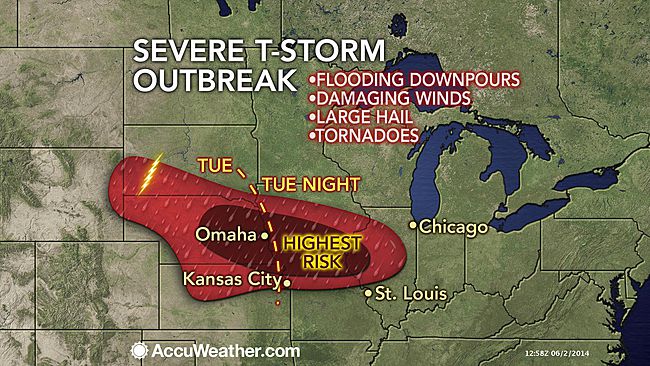
A major outbreak of severe weather will ignite across the central Plains Tuesday afternoon with a possible derecho evolving during the overnight hours.

The potential exists for a far-reaching cluster of violent thunderstorms to track from Nebraska to Iowa and northern Illinois Tuesday night through Wednesday morning.

Such an intense cluster may officially be deemed a derecho.

“The origin of this potential strong line of storms will be in western Nebraska where afternoon thunderstorms will congeal into an intense cluster overnight Tuesday and progress through Iowa and into northern Illinois through Wednesday morning,” stated AccuWeather Enterprise Solutions Meteorologist Brian Knopick.

“The threats would be extremely heavy rain with flooding, large hail and wind gusts greater than 70 mph.”

We’re destroying everything

Puffin

And no one seems to want to stop it:

Now, thanks to a grant from the Annenberg Foundation, the Puffin Cam offered new opportunities for research and outreach. Puffin parents dote on their single chick, sheltering it in a two-foot burrow beneath rocky ledges and bringing it piles of small fish each day. Researchers would get to watch live puffin feeding behavior for the first time, and schoolkids around the world would be falling for Petey.

But Kress soon noticed that something was wrong. Puffins dine primarily on hake and herring, two teardrop-shaped fish that have always been abundant in the Gulf of Maine. But Petey’s parents brought him mostly butterfish, which are shaped more like saucers. Kress watched Petey repeatedly pick up butterfish and try to swallow them. The video is absurd and tragic, because the butterfish is wider than the little gray fluff ball, who keeps tossing his head back, trying to choke down the fish, only to drop it, shaking with the effort. Petey tries again and again, but he never manages it. For weeks, his parents kept bringing him butterfish, and he kept struggling. Eventually, he began moving less and less. On July 20, Petey expired in front of a live audience. Puffin snuff.

“When he died, there was a huge outcry from viewers,” Kress tells me. “But we thought, ‘Well, that’s nature.’ They don’t all live. It’s normal to have some chicks die.” Puffins successfully raise chicks 77 percent of the time, and Petey’s parents had a good track record; Kress assumed they were just unlucky. Then he checked the other 64 burrows he was tracking: Only 31 percent had successfully fledged. He saw dead chicks and piles of rotting butterfish everywhere. “That,” he says, “was the epiphany.”

Why would the veteran puffin parents of Maine start bringing their chicks food they couldn’t swallow? Only because they had no choice. Herring and hake had dramatically declined in the waters surrounding Seal Island, and by August, Kress had a pretty good idea why: The water was much too hot.

Thanks to Shawn Sukumar Attorney at Law.

I’m sure it’ll be fine

Oyster Creek Nuclear Station After Sandy

It’s not as if they’d lie to us:

Operators at the nation’s oldest nuclear plant have terminated an “unusual event” status that was briefly declared after staffers detected an odor of chlorine at the plant’s intake structure. The declaration at the Oyster Creek plant in Lacey Township occurred at 10:34 a.m. Wednesday.

Plant officials say the odor was emanating from piping that provides service water to plant systems. The leak was isolated and the odor dissipated, and officials say it posed no threat to plant workers, the environment or the public.

The “unusual event” declaration — which is the lowest of four levels of emergency classification — was terminated at 11:40 a.m. Normal plant operations continued while the declaration was in effect.

Oyster Creek is located about 60 miles east of Philadelphia.

Slush

Kickoff to Rebuild 2014: January

From Blue Jersey, an update on the fund managed by Mary Pat Christie that was most likely used as a political slush fund. I think the feds will take a closer look:

If you Google “Hurricane Sandy New Jersey Relief Fund,” the first entry is the fund itself, the second entry is a direct link to the fund’s donation page, and the third entry is “NJ Sandy Transparency.” The fund overseen by Mary Pat Christie and promoted by her husband continues to seek donations. However the third entry which refers to Sandy efforts in general is replete with irony. We have learned from investigations, Fair Share Housing, Sandy victims, and others about how little Sandy transparency our governor offers. Christie recently even had the gall to conditionally veto (with 150 changes) Senate President Steve Sweney’s “Sandy Bill of Rights” which strengthens transparency.  

Therefore it will probably come as no surprise that 18 months after the Super-Storm, Hurricane Sandy New Jersey Relief Fund has yet to file, as required by law, any actual income or expenses with the Charities Division of the NJ Attorney General’s office. Its initial, and only, filing of 12/31/2012 indicates zero income and zero expenses. (You can access the report here by entering the fund’s full name or Registration Number: CH3558500). The fund is in violation of reporting regulations. The State earlier granted an extension for Sandy-related funds. However, a phone call with the Charities Registration HOTLINE (973 504-6215) confirms the Christie fund is delinquent.