
In 2013, the institutions of the Cold War still exist, but the coalition behind them is showing signs of serious wear and tear. Americans no longer support war reflexively, and no longer wish to pay for a $50 billion spying apparatus to keep them safe from Communism-anarchism-terrorism. The Federal Reserve, with its massive bailouts, is now just part of the regular tussle of politics. Larry Summers was blocked, but even Ben Bernanke had a rough nomination in 2010, getting 30 “no” votes in the Senate, the most ever for a Fed chair. Prison reform is on the agenda, and drug sentences are being reduced — marijuana will soon be legal. The social safety net, unions, food stamps and the middle class — all signature accomplishments of the Cold War era — are also on their way out as new Jim Crow voting restrictions emerge.
This is not a comfortable world, for either traditional liberals or conservatives, bankers or borrowers. What is debatable in the realm of politics is expanding dramatically, from central banking to the possible end of food stamps and the middle class to whether there is any real difference between so-called private entity Google and its public brother, the NSA. The upside of a post-Cold War politics is the potential for less global superpower interference in local conflicts, fewer prisoners, debate over core questions of finance, and less surveillance. The downside is more economic instability, regional warfare, social unrest and inequality. The challenge in this post-Cold War and post-War on Terror era, for all Americans, is how to re-create a political coalition that ensures some level of social equity and military stability, without an existential enemy to unify us in getting there.
Category: Politics As Usual
Why are people so angry?
Bernie Sanders explains.
http://youtu.be/e4d7GvApeMg
The Census Bureau reports:
– The typical middle class family has seen its income go down by more than $5,000 since 1999 after adjusting for inflation.
– Average male workers made $283 less last year than they did 44 years ago.
– Average female workers earned $1,775 less last year than they did in 2007.
– A record breaking 46.5 million Americans lived in poverty last year.
– 16 million children in America (21.8% of all kids in America) lived in poverty last year.
– A higher percentage of American kids lived in poverty last year than in 1965.
– A higher percentage of African Americans lived in poverty last year than 15 years ago.
– 9.1% of seniors lived in poverty last year, higher than in 2009.
– More American seniors were living in poverty last year than in 1972.
– 48 million Americans are uninsured, 3 million more than in 2008.
“Those who make peaceful revolution impossible make violent revolution inevitable.” – President John F. Kennedy
The president has other options

On the debt ceiling, even if he chooses not to acknowledge them:
Why not point out that if the Administration does not negotiate with the Republicans, it can still prevent defaults and shutdowns due to the failure to raise the debt limit? Is it because the President prefers a crisis atmosphere, and perhaps even a shutdown to prepare the way for the treasured “grand bargain” on entitlements he has been seeking since at least January 2010, when he appointed the beloved Bowles-Simpson Catfood Commission?
That there may be something to this, is suggested by two things happening this morning. In his address to the Business Roundtable, the President stated his willingness to negotiate with the Republicans on the budget on matters including entitlements, along with his unwillingness to negotiate with them on the debt ceiling. Since the issue of the budget and a government shutdown occurs first, at the end of this month, he is saying that he is willing to do a deal on the budget with entitlements on the table, if the Republicans agree to give him a clean debt limit increase bill.
Then later on MSNBC’s “NOW with Alex Wagner” during a panel discussion also, including Alex Wagner, David Corn, and Ezra Klein again. After Ezra once again repeated his apocalypse now framing of the debt limit crisis, Sam Stein emphasized that Obama and the Administration continue to emphasize a willingness to negotiate over the budget.
Sam Stein: . . . you can see the contours of a deal that would upset both parties but palatable. something like in exchange for changes to social security payments, cpi, chained cpi. you could get a reprieve from sequestration. something like that along the lines where both parties are like, well, we don’t really want to do it, but for the sake of making sure we pay our bills — that’s why the republicans keep going there. they know obama care defunding isn’t going to happen, but there are other hostages.
Alex: why does president obama come to the table at all?
Ezra: i think that’s the kind of deal they would come to the table on. they would consider that a deal over sequestration. i’m not sure if they would do that exact deal, but the two deals they won’t do are the ones the republicans want. they don’t want that sequestration deal. they want an obama care deal or a debt ceiling deal. they won’t come to the table on those. . .
So, Sam Stein thinks the zombie “chained CPI” lives again, and Ezra agrees, but also thinks that the Republicans will not agree to that unless they get the deals they want. So, once again, the right wing, through their intransigence, may save us from President Obama’s continuing insistence that seniors must suffer now, and future seniors must suffer as well, for the sake of an illusory long-term debt/insolvency problem that doesn’t really exist, and that he can dispel at any moment by minting a $60 T coin.
Meanwhile, the four Versailles “progressives” on this panel laugh at the stupidity of the Republicans who are marching to the doom of their party, while refusing to call attention to the fact that this “funding” crisis, and the previous ones since 2010 were and are all kabuki, since the President could and still can dispel the illusion of possible insolvency any time he chooses to use the power Congress has given him to mint that coin. The big $60 T one; just the timid TDC.
Good thing we made those Bush tax cuts permanent, huh?
Interview with Alan Grayson
David Dayen, one of my favorite journalists, interviews my favorite congressman:
Last question, going back to Syria for a moment, do you think your work with House Republicans this year, passing more amendments than any member of Congress, created a level of trust that allowed you to cross the aisle and get support for your opposition to military action?
Well, every time I walk over across the aisle, they’re happy to see me. Not because we’re good friends, but because I offer an interesting perspective. They appreciate it. At the committee level, I picked two committees where I would not get into death battles. I didn’t want to go back to Financial Services to lose every single vote. That’s not how it works on Foreign Affairs and the Science and Technology Committee. So I read the bills, I find ways to bridge partisan differences, and make our stuff better. The other side is not so bent and crazy that they don’t appreciate that.
You have to find shared interests. There is this error that the Village makes over and over again, if I can use that term. It’s to think that Republicans are going to vote for Democratic objectives, and vice-versa, because they like each other. This leads to things like the President golfing with John Boehner. It’s this idea that if we play patty-cake, that will make everything better, and it’s not the case. Liberals vote and conservatives vote for the most part on underlying principles. The creative work that leads to someone like me, a 2nd-term Congressman with no leadership role, no position chairing a committee or a subcommittee, what gives me power is that I can understand how they look at things, find ways to make things better, not by compromising and meeting somewhere in between, but in a way that actually respects them and honors them and finds a way to make it better.
That’s not the only way, of course. I’ll give an example, I got a 50 percent increase forbilingual HUD housing counseling. The way Congress works these days, you can imagine how hard it would be to get a 50 percent increase on a cure for cancer. This matters a lot in my district, where 20 percent don’t speak English, and another 20 percent are bilingual. And they need housing counseling, it’s an area where housing values dropped 50 percent. So how did I get that? I said to Republicans explicitly, you can watch it on C-SPAN. I said “You claim you want to improve your image among Hispanics, put up or shut up. If you vote for this, it’s not much money, and you show you have a minimal concern for Hispanics; and if you vote against it, you don’t.” And they rolled their eyes, they said Grayson doesn’t understand, this would rob Peter to pay Paul. But when push came to shove, they accepted the amendment, they wouldn’t allow a roll call vote on it. They didn’t want to have their people vote against Spanish-language housing counseling. They didn’t do it because I made pals with them. I scared the crap out of them!
Great political ad
Gay Massachusetts liberal makes ad featuring his Tea Party dad:
http://youtu.be/Z3S1zcbWkoM
Why are American health care costs so high?
ORIGINAL: By the incomparable John Green, who says the following about his sources: “For a much more thorough examination of health care expenses in America, I recommend this series at The Incidental Economist and The Commonwealth Fund’s Study of Health Care Prices in the U.S. Some of the stats in this video also come from this New York Times story.”
Janet Yellen is not a progressive
I think the Dems on the Senate banking committee had better give her nomination some very careful vetting. Look at some of the things she backed, back in the day. (Back then, even Paul Krugman backed NAFTA. But still.)
Aww
Via CuteEmergency:

How the new left killed Larry Summers’ nomination
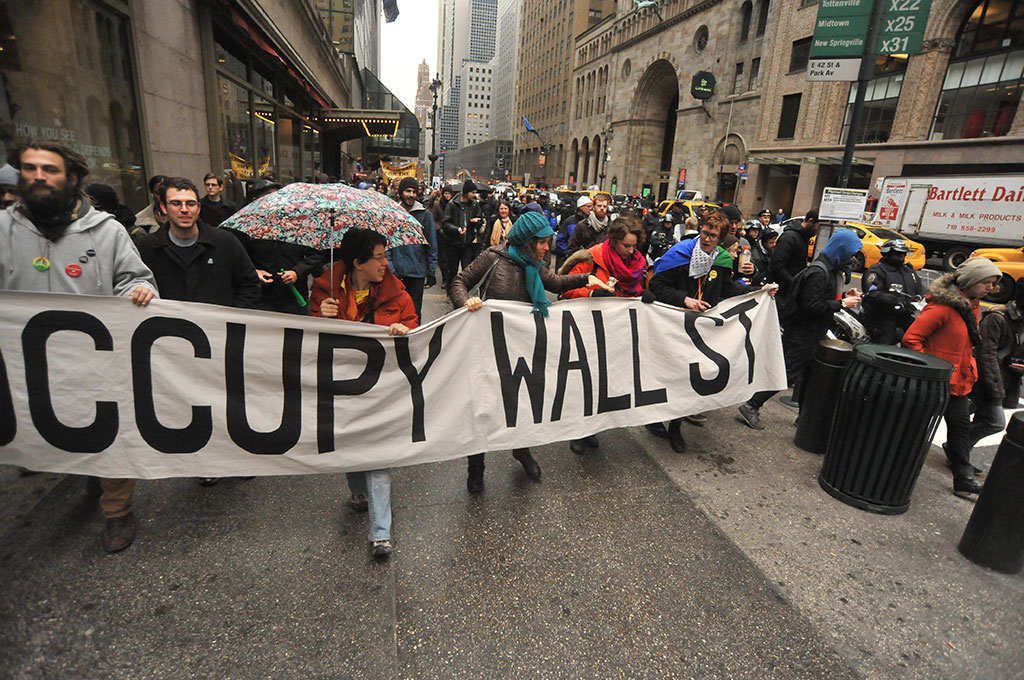
I’m tired of people whining about the Occupy movement: “But they didn’t do anything!” If they didn’t do anything, Larry Summers would be the next Fed chair. Instead, they made everyone afraid to get too close to Wall Street. Peter Beinhart:
But the main reason Summers dropped out is that he became identified with deregulatory policies that were far more tolerated inside the Democratic Party in 1999—or even 2009—than they are today. Four of the 12 Democrats on the Senate Banking Committee and 19 Democrats (plus one independent) of the 54 in the full Senate had already expressed their public opposition, meaning that Obama would have had to rely for Summers’ confirmation on Republican votes. The AFL-CIO had come out against Summers. So had MoveOn, Daily Kos, Chris Hayes, Paul Krugman, and the editorial page of The New York Times. By contrast, Summers had barely any high-profile defenders outside the administration. When people did speak up in his defense, it was often on background.
What the Summers fight shows is how dramatically the financial crisis has reshaped the economic debate inside the Democratic Party. In 2008, his patron and ally, Robert Rubin, was rumored as a potential Obama running mate. Today, Rubin has largely disappeared from public view and, given his role in the deregulatory policies of the 1990s, any defense he offered of Summers would have hurt his cause. In 2006, an ambitious Democratic policy wonk like Gene Sperling could write a book that criticized liberals for being insufficiently pro business without worrying that it would hurt his chances of getting a top government job. No one would do that today.
The Summers fight shows how dramatically the financial crisis has reshaped the economic debate inside the Democratic Party.
Continue reading “How the new left killed Larry Summers’ nomination”