Historic

leahypot

Patrick Leahy holding hearings today on legalizing marijuana:

The Senate Judiciary Committee will open landmark hearings Tuesday in the nation’s capital that could ultimately lead to the legalization of marijuana or at least resolve the deep divide between a federal government that has sent mixed messages on prosecuting users and the growing number of Americans who want the drug to be legal for medicinal or recreational use.

Requested by its committee chairman, Sen. Patrick Leahy, D-Vermont, the timing was triggered by the announcement last month by U.S. Attorney General Eric Holder that federal authorities no longer will interfere as states increasingly adopt laws to either allow medical marijuana or legalize the drug entirely.

In calling for the hearing, Leahy himself questioned whether, at a time of severe budget cutting, federal prosecutions of marijuana users are the best use of taxpayer dollars.

“Leahy favors legalization,” said Dan Riffle, director of federal policies for the nonprofit lobby group Marijuana Policy Project in Washington, D.C.

Riffle said he hopes for a breakthrough in the hearing that would lead to changes in federal banking laws, allowing marijuana sellers to accept credit cards and checks, not just cash.

Australian Federal Elections…

Compulsory voting in the Australian Federal Elections was completed this weekend. In the House of Representative the Coalition Party defeated the Labour Party for the first time in six years. The 81 seat win puts Tony Abbott in the Prime Minister’s office, solidly defeating Prime Minister Kevin Rudd of the Labour Party.

Even though Australia has somehow avoided a lot of the World’s economic woes, the country is facing an expected economic slow down and the Coalition is hoping to avert that…

The ALP (Labour) points to continued growth, low inflation, low unemployment and low interest rates as well as comparisons with other OECD economies, particularly those in the US and Europe, as a sign of Australia’s continued economic strength in the wake of the global financial crisis. Labor argues that its strategy of stimulating the economy during the GFC (Global Financial Crisis) saved Australia from the worst of the crisis…

The Coalition’s main line of attack on the economy is based on the mantra of “debt and deficit”.

It says the rise in debt over this government’s first four budgets has been bigger as a share of GDP than over any other four year period since at least 1970, when the historical records in modern budget papers began.

It blames the Labor government’s stimulus packages, and a continuing high spend, for pushing Australia’s debt to unsustainable levels. It also contrasts Labor’s repeated deficit budgets with the former Coalition government’s run of surplus budgets.

Australia has a very low percentage of debt as part of GDP at 3.2%.

The Senate race has nearly been decided and it may have a makeup that will put a thorn in the Coalition’s side. Of 76 seats the Coalition has 32 seats, Labour has 25 seats. The Greens have 9 seats and generally will vote along with Labour. There are 8 seats from minority parties that are going to cause some uncertainty in the Senate…

Instead of Labor and the Greens being able to form a blocking majority, the Abbott government must deal with the uncertainty of minor party senators, including one or perhaps two from the insurgent Palmer United Party, South Australian Nick Xenophon and an allied candidate, and potentially a Motoring Enthusiast Party senator from Victoria.

Results are highly provisional, with less than half the upper house vote counted and counting at an early stage in Western Australia, but the new Parliament would seem unlikely to be entirely free of the uncertainty that dogged the minority Labor government in the last.

Australia isn’t without its media issues in elections, too….

Australia’s commercial TV networks have banned an advertisement that criticises the anti-Labor coverage of Rupert Murdoch’s newspapers.

Channels Seven and Ten refused to air the ad commissioned by GetUp, while Nine screened it over four days in Brisbane – then cancelled it after blaming a “coding error”.

GetUp (a progressive action group) says it will report all three networks to the competition watchdog for alleged “misuse of market power”…

The group has accused the broadcasters of censorship to avoid displeasing Murdoch and his company, News Corp. It intends to lodge a complaint with the Australian Competition and Consumer Commission, claiming the networks have breached rules by refusing to supply their services.

In the banned advertisement, a man is seen scooping up dog feces with a copy of News Corp’s Courier Mail.

The man tells viewers: “It was great when you could pick up a paper and get, well, news. Recently, the Courier Mail and the Daily Tele have been using their front pages to run a political campaign instead.”

The man says it is “fair enough” for Murdoch to hold a personal opinion about Prime Minister Kevin Rudd but adds: “Political bias presented as news is misleading crap”

Oh, REALLY? I am shocked! Here is the ad…

http://youtu.be/grqp-JQMFuM


He-man woman haters club

he-man-woman-haters

How insulting is this? All women are interchangeable, I guess:

The White House is considering nominating a top female official at the Treasury Department to fill one of the vacant seats at the Federal Reserve, according to two people familiar with the process, amid criticism over the role of women in the Obama administration.

As undersecretary for international affairs, Lael Brainard is one of the most highly ranked — and most visible — female members of President Obama’s economic team. Her name has long been circulated in the insular world of Fed watchers as a potential candidate to sit on the central bank’s influential board of governors.

But her conversations with the administration have ramped up recently, and she is seriously considering accepting the nomination, according to the two people, who requested anonymity to discuss personnel issues. The White House declined to comment.

Brainard’s nomination could help solve a public-relations problem for the White House, which has been assailed over the lack of women in premier posts. Obama is weighing whether to name Lawrence H. Summers, a close former adviser, to the top job at the Fed — a move that would mean passing over Janet Yellen, the vice chair at the central bank whom many once considered a shoo-in.

Lehman Brothers

So all a Wall Street banker has to do is deny that he knows what someone else says he knows, and the SEC folds? Oy:

Mr. Fuld’s role was harder to ferret out. Bart H. McDade, another Lehman executive, told Mr. Valukas that Mr. Fuld “was familiar with the term” Repo 105 and “knew about the accounting.” But Mr. Fuld told the S.E.C. that he had never heard of Repo 105, officials said, undermining a potential case. A lawyer for Mr. Fuld declined to comment.

The S.E.C. team also concluded that Repo 105 would not have been “material” to investors because the firm’s leverage ratio was trending downward regardless of Repo 105.

That conclusion set off a wave of dissent inside the S.E.C. Senior accountants and the head of the S.E.C. unit that oversaw corporate disclosures questioned the findings. Ms. Schapiro urged Mr. Canellos to keep digging.

But Mr. Canellos, a former federal prosecutor who is now the co-head of the S.E.C.’s enforcement unit, did not budge. Despite the political pressure, he told colleagues at one of the meetings, they could not bring a case if the evidence was lacking.

“Our job is to seek justice,” he said.

Stealing home

If you didn’t already see this Washington Post piece from yesterday, you should read it. And by the way, I don’t think D.C. is the only place where this happens. I know the FBI has been investigating our former sheriff, and I’ve heard rumors of him “saving” properties in exchange for kickbacks:

On the day Bennie Coleman lost his house, the day armed U.S. marshals came to his door and ordered him off the property, he slumped in a folding chair across the street and watched the vestiges of his 76 years hauled to the curb.

Movers carted out his easy chair, his clothes, his television. Next came the things that were closest to his heart: his Marine Corps medals and photographs of his dead wife, Martha. The duplex in Northeast Washington that Coleman bought with cash two decades earlier was emptied and shuttered. By sundown, he had nowhere to go.

All because he didn’t pay a $134 property tax bill.

The retired Marine sergeant lost his house on that summer day two years ago through a tax lien sale — an obscure program run by D.C. government that enlists private investors to help the city recover unpaid taxes.

For decades, the District placed liens on properties when homeowners failed to pay their bills, then sold those liens at public auctions to mom-and-pop investors who drew a profit by charging owners interest on top of the tax debt until the money was repaid.
Continue reading “Stealing home”

Virtually Speaking Sunday

6p PT/9p ET

RJ Eskow & Cliff Schecter talk with Jay Ackroyd about the impact of Obama initiating Congressional support for Syria; Grand Bargain and the Affordable Care Act (ACA) debate; how the creation of the Frankenstein of the Tea Party is now threatening a huge number of Republicans and how this might tie into Syria and Medicaid; and the importance of language and messaging;

Plus political satire from Culture of Truth. Jay Ackroyd moderates.

Follow @CliffSchecter @RJEskow @JayAckroyd @Bobblespeak

Listen live or later http://www.blogtalkradio.com/virtuallyspeaking/2013/09/09/rj-eskow-cliff-schecter-virtually-speaking-sundays

Cory Booker

cory

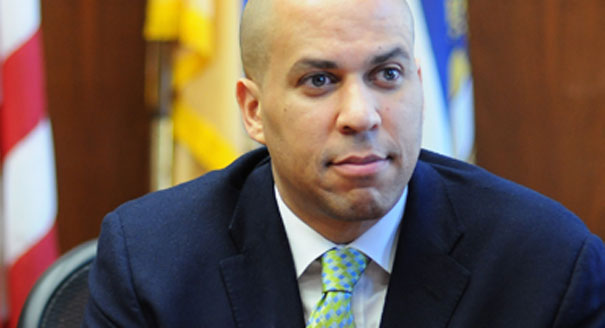
Noam Scheiber with an excellent piece in the New Republic about the rising political star:

Booker’s aides insist he is a progressive at heart; it has just taken time for him to modulate his message for a national audience. “I think people grow … in terms of the way you understand how you can fix problems,” says a staffer. This may be true: For example, Booker quickly backtracked after his Bergen Record comment on Social Security. Yet the most alarming feature of Booker’s politics isn’t his proto-Rubinism. It’s a more primitive instinct—a skepticism of government that flourishes in certain (usually right-of-center) circles of financial elites. Naturally, Booker doesn’t quite put it this way. Often his skepticism is merely the subtext of a riff about some heroic collaboration with a deep-pocketed donor.

But it’s clearly there. “We in Newark have said that, if we as a government just try to solve our problems, try to rely on our state legislature, and just try to rely on the federal government … we’re never going to solve our problems,” Booker explained at an Aspen Institute discussion in 2011. “[W]e have to find a way to partner with other sectors.” He added that Americans “have obligations to make sacrifices above what we do in just paying taxes” and ticked off examples of philanthropists pouring money into Newark. “We now have the largest parks expansion [in America],” he said. “Not because of government action. But because of the courage of average American citizens [i.e., donors] to say, ‘I’m going to show that we can create global change right here in my neighborhood.’ ”

Don’t get me wrong: If I were mayor of Newark, I’d be looking for money anywhere I could find it, too. As Booker points out, you certainly wouldn’t want to wait for funds to trickle in from Trenton, or from the Republican-controlled House of Representatives. What I wouldn’t do is elevate this ad hoc hole-plugging tactic into a governing philosophy. Even his Aspen co-panelist Gavin Newsom, a fellow moderate who is the lieutenant governor of California, seemed to flinch during Booker’s monologue on the subject. (“Where I’ll disagree with Cory is I think it was by government action,” Newsom interjected.)

Kevin Griffis, Booker’s spokesperson, says that a Senator Booker would try to “think creatively about whether or not he can use his convening power … to bring the same innovations you’ve seen work in Newark” to other parts of New Jersey, even the country. To point out just one flaw in this plan: If corporations were less keen on using loopholes to save billions in taxes, we wouldn’t need to rely on the millions they donate to charities and cities like Newark. No doubt the country’s biggest corporations will be keen to embrace a freshman senator who preserves their cushy arrangement. And Booker will have plenty of chances—closed-door negotiations, dead-of-night amendments—to vindicate their enthusiasm.

The far bigger problem, though, is that Booker’s philosophy simply doesn’t scale, to borrow a word he has learned from the tech sector. Most mayors don’t have a fraction of the star power and connections that Booker does, something he’s happy to note. (“I don’t mean to sound immodest,” he told his local paper. “But [the private donors] all say, if you run the schools, we will come to Newark.”) And even if there were a hundred mayors who could match Booker’s wattage, there aren’t nearly enough check-writing billionaires to make much of a dent in their to-do lists. Only the federal government and a handful of states have those kinds of resources.

Outside the context of a local politician struggling to fund his agenda, Booker’s worldview—the mild suspicion of government initiative, the trivialization of paying taxes as a way to bring about change, the sanctification of corporate do-gooding—is a few ticks to the right of a Clinton-era New Democrat. Really more like enlightened Paul Ryan-ism. There are definitely worse philosophies. But it’s not exactly progressive.

Trans Pacific Partnership is very very secret because it’s very very bad

Techdirt:

We’ve been reporting for several years about the extraordinary levels of secrecy surrounding the TPP negotiations, where little information was released about what was going on, and there were few opportunities for representatives of civic and other groups to meet with negotiators to present their point of view. More recently, there have been some indications that this lack of transparency is fuelling increasing discontent among some of the participating nations.

In order to get the trade deal sewn up by the end of this year, and before resistance spreads further, the negotiators have decided to hold ‘inter-sessional’ meetings for the remaining unresolved areas. But as this article from Scoop explains, these won’t be like routine TPP meetings, with their routinely unhelpful levels of opacity:

Detective work indicates that informal ‘inter-sessional’ meetings on six chapters are scheduled within the next four weeks — all in North America.

‘ “Inter-sessional” is a misnomer’, says Professor Kelsey, ‘because they are not planning any more formal sessions. There will be no access for the media or stakeholders to these smaller meetings.’

‘Past inter-sessionals have been shrouded in secrecy to ensure we can’t find out what’s happening and we don’t have access to those negotiators who see value in talking with us.’

‘The last three years of the TPPA have been widely condemned for their lack of transparency. The process is now going further underground’.That is, rather than opening up TPP in response to widening criticisms, its negotiators will now be meeting in complete secret, presumably until they emerge with some kind of a deal, however bad. Since no information will be released about those gatherings behind closed doors, and there will be no opportunities to convey concerns to the participants, the public in whose name all these talks are taking place will have no way of knowing what is going on or of offering its views. It’s the ultimate in arrogant, “we know best” negotiations where citizens are expected to accept what is given, no discussion allowed.

H/t Steve Duckett.

Virtually Speaking Thursday

6p PT/9p ET – Listen live or later: http://www.blogtalkradio.com/virtuallyspeaking/2013/09/06/gaius-publius-dave-johnson-stuart-zechman-w-jay-ackroyd

Who are ‘we the people’?  How might clear majorities of people prevail given that all the electeds (mostly) are against us?  Dave Johnson, Gaius Publius, Stuart Zechman and Jay Ackroyd consider the political environment often described as left, right, center and the inverse relationship between the views of the people with power and the general populace.

For example, large majorities in both Republican-supporting voters and Dem-supporting voters favor No Cuts  to Education, Medicare and Social Security.

How do we bring this popular coalition together in a way that wins? What are our best strategies for doing that?