
Most of them are white, in case you forgot.
Category: Class War
Waste
What Duncan said. The fact that they’re even talking about cutting rank-and-file military salaries is obscene. A huge number of military families are already on food stamps.
Turkey Day with Lucretius and Eric Cantor

Last week I bought enough Wild Turkey to get the swamp rabbit through the week, which left me just enough money to buy a real turkey for Thanksgiving dinner. But I can’t bake a turkey because there’s no oven in my shack, so I hitchhiked from the swamp where we live to a convenience store to buy turkey hoagies. These turned out to be almost as expensive as a whole turkey but what the hell, it’s a holiday, let tomorrow take care of itself.
My shack has no heat, so we ate on the porch in feeble sunlight. I talked politics and the rabbit talked philosophy. Which means he lectured me on the wisdom of the poet Lucretius, who believed there’s no afterlife, and we therefore should squeeze as much pleasure as possible out of our limited lifespans. Not necessarily by overindulging our appetites, as the rabbit does, but rather by learning to appreciate the modest pleasures — a simple meal, a beautiful sunset, the company of good friends, and so on — that Lucretius believed are conducive to peace of mind.
“You ain’t never gonna have no peace of mind you keep worrying about them politicians,” he said. This was in reference to my ranting about Republican Congressman Eric Cantor, who wants to eliminate overtime pay for hourly workers.
“But this Cantor guy is special,” I replied. “A smug little right-wing weasel, always a smirk on his face, always pretending he’s doing working people a favor by ripping them off.”
The rabbit picked a red pepper from his hoagie and threw it in the swamp. “He’s doin’ what weasels do, Odd Man. You expectin’ divine justice or something?”
He thinks I’m a Platonist, maybe even a closet Christian. “I’m expecting earthly justice. Just because Lucretius was an atheist doesn’t mean he didn’t believe in justice.”
“Them’s nothin’ but words,” the rabbit said. “You’re like one of them frogs in the scum pond over there, croakin’ at the top of your lungs I’m special, I’m special. You don’t even get no hourly wage, let alone OT.”
“That’s my point, you dumb rodent. Things get worse unless we fix them. The fact that the universe is indifferent is no excuse to behave like sheep. It’s a reason to behave like humans.”
I read to him from Stephen Greenblatt’s book about Lucretius, The Swerve:
All speculation — all science, all morality, all attempts to fashion a life worth living — must start and end with a comprehension of the invisible seeds of things: atoms and the void and nothing else.
The rabbit took a drink and said, “That’s my point. Humans, sheep, weasels — what’s the difference? We’ll all be dead in an eye blink.”
“I don’t get you,” I said. “Last week you said those people who work at Walmart should burn down the stores if they don’t get pay raises.”
“Well, I changed my mind.” he said. “Last week I didn’t have no whisky.”
I shook my head. “The times are changing, rabbit. Humanism is back. Even the new pope is down with it.”
He sucked a few last drops from his bottle and said, “Great. Tell that to Rush Limbaugh and his army. Tell Eric Cantor.”
Footnote: In case you missed it, Pope Francis called the current brand of free-market capitalism “a new tyranny,” so Limbaugh called him a Marxist. I’d consider that a compliment.
Pope Francis drives the wingnuts batty
And Charlie Pierce is loving it:
In case you missed the latest from Pope Central — every Republican politician, every conservative economist, and every wingnut pundit of the past 30 years either already is in H-E-Double-Hockey-Sticks, or is on the way down the greasy slope in that general direction. Pope Krugman speaks.
“In this context, some people continue to defend trickle-down theories which assume that economic growth, encouraged by a free market, will inevitably succeed in bringing about greater justice and inclusiveness in the world,” he said. “This opinion, which has never been confirmed by the facts, expresses a crude and naïve trust in the goodness of those wielding economic power and in the sacralized workings of the prevailing economic system. Meanwhile, the excluded are still waiting.”
“Trickle-down.” The SOB actually used the phrase? In an official document? Classic. Faith in markets has “never been confirmed by facts”? Okay, right off the top, any time this guy wants space on the blog, it’s his. I keep waiting for him to give me the Latin for “zombie-eyed granny starver.”
“Crude and naive trust in the goodness of those wielding economic power”? Neil Cavuto just had a stroke.
I know, I know. St. James. “Faith without works” and all. (And the ideas on abortion in the same document are tough and ought not to be enshrined in law.) But one thing to remember is that the Church is still producing seminarians, and the new ones are going to be trained in obedience to this guy’s ideas. That was how we wound up with a great generation of progressive priests during and after Vatican II. The problem came when John Paul II, a theological reactionary, got elected and spent more than two decades rolling back the achievements of those priests, particularly in the oligarchical tyrannies of places like Central America. Popes can transform the Church without noisily transforming its doctrines. We can hope (and pray, if you’re so inclined) that historical precedent is not ironclad.That may not seem like much, all things considered, but I hope Paul Ryan, good Catholic boy, has made his nine First Fridays because this is a papacy with his name on it.
Good morning
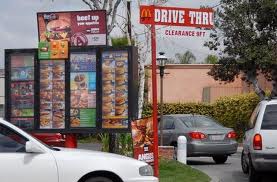
Headed over to what I thought was a Walmart protest this morning, but when I got there, no one else showed up. I mean, it is 20 degrees this morning, but if I could get my ass out of bed, dressed and out of the house, anyone can.
So instead I filled up my gas tank and swung by Mickey D’s drivethrough for breakfast. I decided to get a Sausage McGriddle (I only do it maybe every two years, don’t judge) and some hot tea. As I paid the woman at the window, I said, “I hope you’re at least getting time and a half.”
“Nope,” she said, shaking her head. “I wish.”
“Well, the same people who are organizing Walmart are coming after you guys next,” I told her.
“Good. I can’t wait.”
Koch brothers go after Seatac minimum wage hike
 Populism 2.0: Is SeaTac seeing the rebirth of captive-industry politics? (via Pando Daily)
By David Sirota On November 26, 2013The national conservative movement is waging a war… in SeaTac. That’s a weird sentence. Out of all the places to wage a political fight, why would conservatives and the infamous Koch Brothers choose a Pacific…
Where were you when poverty became acceptable?
I’ve been thinking of JFK and of those hard-luck cases who work at places like McDonald’s and Walmart. (There but for the grace of God and the wearing of a clown uniform go I.)
Those who are old enough can recall exactly where they were 50 years ago when JFK was killed, but I’ll bet few of them recall when the fight to eradicate poverty, a key factor in Kennedy’s New Frontier spiel, turned into acceptance of the widening gap between rich and poor. No, worse than that — acceptance of the idea that government’s main job is to ensure the rich get richer at the expense of the rest of us.
The union-busting Ronald Reagan had something to do with it, but there wouldn’t have been a Reagan without the legions of working-class white voters who thought Reagan had their interests at heart.
From Noam Chomsky, with my boldings:
We don’t use the term “working class” [in America] because it’s a taboo term. You’re supposed to say “middle class,” because it helps diminish the understanding that there’s a class war going on.
It’s true that there was a one-sided class war, and that’s because the other side hadn’t chosen to participate, so the union leadership had for years pursued a policy of making a compact with the corporations, in which their workers — say, the autoworkers —- would get certain benefits like fairly decent wages, health benefits and so on. But it wouldn’t engage the general class structure. In fact, that’s one of the reasons why Canada has a national health program and the United States doesn’t. The same unions on the other side of the border were calling for health care for everybody. Here they were calling for health care for themselves and they got it. Of course, it’s a compact with corporations that the corporations can break anytime they want, and by the 1970s they were planning to break it and we’ve seen what has happened since.
How’s that “compact with the corporations” working for you now, former labor unionists and ex-members of the middle class?
Footnote: The income gap between rich and poor has been growing since the 1970s. Ninety-five percent of the gains made in recovery from the 2008 crash have gone to the richest one percent of Americans.
America: We’re poor and we’re scared
The Washington Post has done a poll that shows lower-income workers are terrified they will lose their awful jobs. Then it interviewed one of those workers, who commutes three hours a day for $5.25 an hour:
“I can’t save money,” he said recently, “to buy the things I need to live as a human being.”
Happy Thanksgiving, America. Try not to think about the “unprecedented economic anxiety”that we’re suffering [emphasis added]:
More than six in 10 workers in a recent Washington Post-Miller Center pollworry that they will lose their jobs to the economy, surpassing concerns in more than a dozen surveys dating to the 1970s. Nearly one in three, 32 percent, say they worry “a lot” about losing their jobs, also a record high…
Are you one of the perpetually vocationally insecure? It’s far more acute among workers who make less than $35,000: A majority of those low-earners seriously fear for their jobs, which is 46 percent more than were worried in similar polls during recessions in 1992 and 1975. Higher earners are more insecure than they used to be, too. Just less so than the poorer.
What does it mean to “lose a job to the economy,” exactly? It sounds like a natural mechanism, as if the laws of science ordain it: action, reaction. Interest rates move this way, earnings move that, and the shifting between them sheds jobs, like the earth sighing out hot liquid rock when tectonic plates bump.
But the economy doesn’t fire anyone; executive boards and operations officers and middle managers do—people who either are under orders to lay off company-building paycheck-earners for “the good of the company,” or are members of the elite cadre that gets to define “the good of the company,” usually in terms that ensure not economic survival or long-term growth, but maximized shareholder value.
Somehow, along the way, America’s poorest, hardest-working, least-secure citizens accepted this elision: Their jobs are endangered not by the avarice of the management or investors who exploited them in the first place, but by periodic indigestion in the mysterious guts of this cosmic clock known as The Economy. This economy, man. It’s the economy, stupid. Can’t anyone fix this economy?
Yep
Can’t argue with this. I know so many professional activists (not all of them, but a lot) who are trapped by the official policies of the people they work for to the point where they literally can’t see past them.
Some of them are really good at movement building. Most of the ones I’ve met are not. They maintain a system where white, privileged college graduates (usually from the same handful of schools) are permitted into the paid ranks. It’s one of the reasons why I never pursued a paid job as an activist — I’m not safe enough for these people.
Technology didn’t kill middle class jobs, public policy did
A widely held view in elite circles is that the rapid rise in inequality in theUnited States over the last three decades is an unfortunate side-effect of technological progress. In this story, technology has had the effect of eliminating tens of millions of middle wage jobs for factory workers, bookkeepers, and similar occupations.
These were jobs where people with limited education used to be able to raise a family with a middle class standard of living. However computers, robots and other technological innovations are rapidly reducing the need for such work. As a result, the remaining jobs in these sectors are likely to pay less and many people who would have otherwise worked at middle wage jobs must instead crowd into the lower paying sectors of the labor market.
This story is comforting to elites, because it means that inequality is something that happened, not something they did. They won out because they had the skills and intelligence to succeed in a dynamic economy, whereas the huge mass of workers that are falling behind did not. In this story, the best we can do for those left behind is empathy and education. We can increase opportunities to upgrade their skills in the hope that more of them may be able to join the winners.
That’s a nice story, but the evidence doesn’t support it. My colleagues Larry Mishel, John Schmitt, and Heidi Sheirholz, just published a papershowing that the pattern of job growth in the data doesn’t fit this picture at all. This paper touches on a wide variety of issues related to technology and wage inequality, but first and foremost, it shows that the story of the hollowing out of the middle does not fit the data for the 2000s at all.
Since 2000, the increase in employment has occurred almost entirely in low-wage occupations. There has been a decline in relative employment for both workers in middle wage and high wage occupations. If this “occupational shift story” explained trends in wages we should expect to see sharply rising wages for retail clerks, custodians and other workers employed in low-paying occupations.
Of course, we see the opposite. Workers in these occupations continued to lose ground in the 2000s as they did in the prior two decades. Their wages barely kept pace with inflation over the last three decades.
The paper makes an impressive case that technology is not the main explanation for the rise in inequality that we have been seeing. In fact, even MIT economics professor David Autor, the leading proponent of the occupational shift story concedes this point. He was quoted in a New York Times column saying of the view that technology explains inequality:
It can suck all the air out of the conversation … All economists should be pushing back against this simplistic view.
Given the evidence compiled by Mishel et al, it would be difficult to maintain that technology has been the main culprit in the upward redistribution of income that we have seen.