
Awe-inspiring. Category 5 #HurricaneIrma GOES-16 30-second imagery, 500-meter resolution "Red" Channel. (Prelim/Non-operational) pic.twitter.com/J1SfqDXNFJ
— Mike Umscheid (@mikeumsc) September 5, 2017
Category: Environmental
Might be a little something to this climate change theory
Wildfire burning through mountains just north of downtown Los Angeles is largest ever within city limits, mayor says https://t.co/lBfwlBUmuA pic.twitter.com/GMpH9ts4pE
— ABC News (@ABC) September 2, 2017
If you live in Florida or along the Atlantic coast, you should check your flood probability here.
Water, water, everywhere?

I live about a half-mile from the Delaware River, in a part of the city called the Riverwards. It’s very, very flat here.
I also live a half-mile south of a former chemical plant, and about a mile northwest of a major gas facility that stores liquified natural gas. (They call the ships that carry LNG “floating bombs.”)
I’m about three blocks north of Frankford Creek.
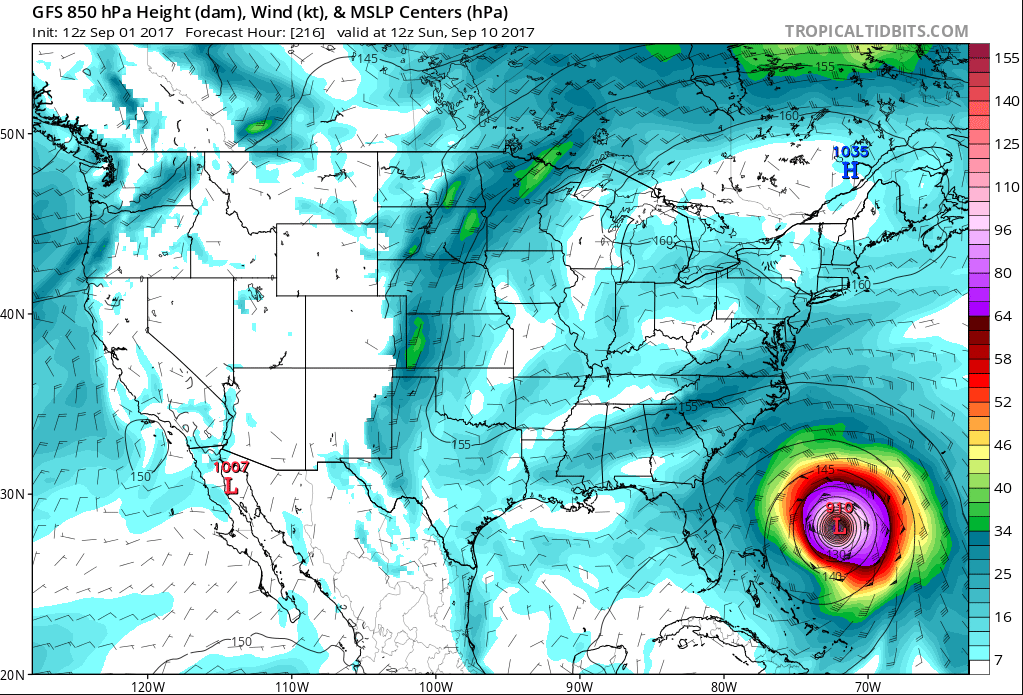
And now there’s this new hurricane, Hurricane Irma. Looks like it’s going to be a Cat 4, just like Harvey. They’re saying it might hit the East Coast in a week to ten days, although it’s still too early to tell.
As we just saw in Texas, an awful lot of people in America live sandwiched in between all kinds of potential threats. The less wealthy you are, the more likely it is. The job providers who get rich off these facilities live nowhere near them.
Bless their hearts.
Irma might turn out to sea and become what weather geeks call a fish storm. I hope so. But it does seem likely to hit the coast; we just don’t know how far north. The models are scary, but models aren’t the same as forecasts. If this was a forecast, I’d already be in my car and heading west:
Unzoned Houston
This event is unprecedented & all impacts are unknown & beyond anything experienced. Follow orders from officials to ensure safety. #Harvey pic.twitter.com/IjpWLey1h8
— National Weather Service (@NWS) August 27, 2017
As a reporter 30 years ago, I covered stormwater politics. What I learned is that flood maps aren’t updated, and that’s for a reason. As long as the official map says it’s okay to build, a politician can sign off on development that means campaign cash in his pocket. Then officials are interviewed after massive floods, saying “it’s a once-in-500-year event.” Only if you go by their old maps!
I also remember when Bill Clinton tried to pass a FEMA regulation that if your house was destroyed more than 50% by flooding, you would not be permitted to rebuild in the same place. Well, all those wealthy Republicans with beachfront properties were furious, and kicked up a major fuss. Their politicians got Clinton to withdraw the change.
This is what I hate about Republicans. They have completely abdicated any pretense of working for the common good, it’s all about their donors. Period. That’s why nothing was done about all the climate change warnings, and it’s why one of the first things Trump did was rescind all of the executive orders on climate that Obama put in place because Republicans refused to allow anything substantive to happen.
Now we have someone who hates environmental protection in charge of the agency charged with protecting the environment. Even Richard Nixon cared about the environment!
7/ Since 2010, more than 7K residential buildings have been built in FEMA designated flood zones in Harris County, according to our analysis
— ProPublica (@propublica) August 27, 2017
Trump’s lawyer sue Greenpeace, make jaw-dropping accusations

Still reeling from a D.C. district court loss in June, Energy Transfer Partners, the owner of the controversial Dakota Access Pipeline (DAPL), has sued Greenpeace and other environmental groups in a $300 million racketeering case, accusing them of inciting terrorism, fraud and defamation and violating state and federal RICO laws. On Tuesday, ETP released a statement… Continue reading “Trump’s lawyer sue Greenpeace, make jaw-dropping accusations”
The land of property rights, with one notable exception

Even if I didn’t have friends who were NDNs, just as a human being, it’s hard to mix the hypocrisy of taking Indian lands. Charlie Pierce:
LINCOLN, NEBRASKA—The involvement of the indigenous populations in both the United States and Canada in the opposition to various pipelines, including the Keystone XL, should come as no surprise. As we have said, the abuse and misuse of the eminent domain process in the construction of the pipeline here has been an effective organizing tool to bring together environmentalists and ranchers to oppose the project. And if it is nothing else, the history of the native peoples on this continent is the greatest example of eminent domain abuse in human history. They know better than anyone the feeling that greater forces from the outside can overwhelm and threaten long-standing ways of life.
On Tuesday, in a basement ballroom of a downtown hotel, the Ponca, Santee, Omaha, and Winnebago peoples organized a treaty among themselves, and several other tribes, expressing their opposition to the pipeline. From the start, here and in Canada, the indigenous peoples of the continent have been at the heart of the opposition to projects like this one, most visibly during the extended confrontation over the Dakota Access pipeline. In Nebraska, the alliance between Native Americans and ranchers, particularly over issues of eminent domain, not only was shot through with remarkable historical je ne sais quoi, it was a pragmatic decision based on common interests. People shouldn’t buy the right to steal your land. The Native people are familiar with this phenomenon and with how angry its victims can become.
Scott Pruitt vs. reality
you should read @emilyhholden's excellent story: https://t.co/i6FQsfGXE4 utilities are in a really tricky spot here.
— a luminous presence shaped like Seth D. Michaels (@sethdmichaels) August 9, 2017
A key government report on climate change has leaked. Here’s what you need to know

The New York Times published a draft of the report on Monday night. Power Plant A coal-fired power plant in Arizona John Fowler/Flickr The New York Times published a draft of a long-awaited government report on climate change on Monday night and the picture it paints is dire. Though the copy obtained by The New York… Continue reading “A key government report on climate change has leaked. Here’s what you need to know”
Tesla solar roof is cheaper than yours

Almost 6 months ago, media sources were speculating on the prices of Tesla’s solar roofing tiles – and now, the numbers are in. In contrast to the original price tag of $24.50 per square foot that was previously estimated by Consumer Reports, Tesla announced in May that the tiles would be $21.85 – roughly 20% less… Continue reading “Tesla solar roof is cheaper than yours”
Huge drop in men’s sperm levels confirmed by new study – here are the facts


Chris Barratt, University of Dundee
Sperm count in men from North America, Europe, Australia and New Zealand declined by 50-60% between 1973 and 2011, according to a new study from the Hebrew University of Jerusalem. Surprisingly, the study, which analysed data on the sperm counts of 42,935 men, found no decline in sperm counts in men from Asia, Africa and South America, although there was limited data from these areas.
Overall, this is a very disturbing report. There has been a longstanding debate among scientists as to whether sperm counts have decreased or not. But what’s different about this study is the quality of the analysis. It was done in a systematic manner, accounting for several of the problems that had affected previous studies, such as the method used to count sperm and comparing studies performed sometimes decades apart. As such, most experts agree that the data presented is of a high quality and that the conclusions, although alarming, are reliable.
So what is going on? There has been concern for a number of years about an increase in abnormalities in male reproductive health, such as testicular cancer. The decline in sperm counts is consistent with these increases and this adds weight to the concept that male reproductive health is under attack and is declining rapidly.
In fact, if the data on sperm counts is extrapolated to its logical conclusion, men will have little or no reproductive capacity from 2060 onwards. The most rational explanation for the decline in male reproductive health is the changes in the environment. Current research suggests that the male foetus is particularly susceptible to exposure to pollutants and so changes that occur early in foetal life can have a very significant effect on the adult.

Fotokostic/Shutterstock
What can be done?
The simple answer is that we need much more research to find out why this decline in sperm count is happening. We cannot be complacent about the potential negative effect on fertility and must now urgently rally to substantially increase the research effort into male reproductive health.
Also, although the prevailing evidence shows a decline in reproductive health, not all studies show this; there are some geographical differences. It will be critical to determine what the key differences between geographical regions are – such as genetic differences and exposure to specific pollutants – so we can then examine treatment strategies to limit these negative effects.
 If it’s the foetus that is mainly affected, what can the adult man do? Even in adults, exposure to chemicals, such as bisphenol A, which are thought to affect fertility, can have a negative effect, so men should limit their exposure to toxic chemicals. This includes stopping cigarette smoking. Also, a healthy lifestyle is very important as there is a known link between obesity and reduced sperm count.
Chris Barratt, Professor of Reproductive Medicine, University of Dundee
This article was originally published on The Conversation. Read the original article.