
Foxygen:
https://youtu.be/T943KTBi7q4?list=PLCJLiJ8uSJrBG5da3z1DGd0PQssU_feq-
Foxygen:
https://youtu.be/T943KTBi7q4?list=PLCJLiJ8uSJrBG5da3z1DGd0PQssU_feq-
St. Paul and the Broken Bones:
https://youtu.be/qajImAWrTVA?list=PLCJLiJ8uSJrBG5da3z1DGd0PQssU_feq-
Sleater-Kinney:
https://youtu.be/QLwD1to3dZU?list=PLCJLiJ8uSJrBG5da3z1DGd0PQssU_feq-
Bettye LaVette covers the Beatles:
https://youtu.be/_6okAPKv_iE?list=PLCJLiJ8uSJrBG5da3z1DGd0PQssU_feq-
https://youtu.be/_IAO_fF5D4s
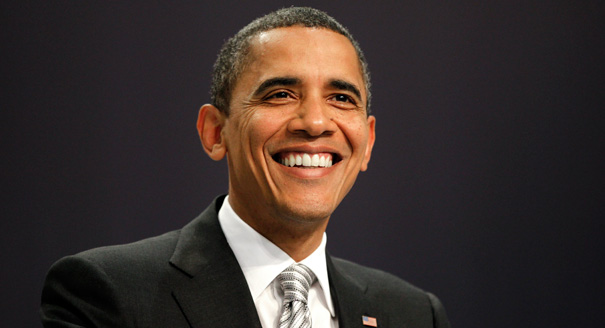
Yes, this is what several people have told me. Let’s hope it stays this way:
President Barack Obama doesn’t have the votes at this point to win U.S. House passage of legislation that would expedite approval of trade accords, a Democratic leader in the chamber said.
Obama has sought the trade-promotion authority legislation, largely backed by Republicans, to help him close a 12-nation deal called the Trans-Pacific Partnership and submit it to Congress for expedited passage without amendments.
“Does the president have the votes? I’d say at this stage he does not,” Representative Xavier Becerra of California, the fourth-ranking House Democrat, said Thursday at a meeting with Bloomberg reporters and editors. “I think it’s more a matter of: Can Republicans gather Republican votes?”


Salon just interviewed Bruce Bartlett, who worked for Reagan and Bush the Elder, and recently criticized a piece about a campaign finance reform-oriented GOP presidential candidate from Harvard Law’s Lawrence Lessig. An excerpt:
Does your skepticism apply beyond presidential campaigns? The idea that the impact of money is overstated when it’s a high-profile race is pretty mainstream; but do you take it further?
Well, in general, I think that people overestimate the value of money in politics. I think that there is a threshold effect; that is to say, you need a minimum amount to be competitive. And I think up to a certain point, in any given race, there’s enormous value to each additional dollar that is raised, because it will be spent efficiently in increased votes. But I do think that there is a point at which it levels off and at which point each additional dollar doesn’t really help very much, if at all. I think that there’s also a downward point at which you have too much money, and you actually start alienating potential voters by running too many ads, doing too much stuff that just alienates, irritates them, so you actually end up being worse off.
Why do you think that understanding is not reflected more in political analysis?
I think campaign consultants basically know this, but there’s an enormous bias in the system. That results from the fact that basically campaign consultants make their money, by running as many ads as you can possibly raise the money to run. I’m not sure how many contributors really understand how the system operates.
See, what happens is, these consultants, they own the advertising companies that buy the advertising time and so they get a commission of like 15 percent on every dollar of advertising that a campaign buys. The more advertising that they buy, the more money that goes into their pockets. So it’s in their interests to keep buying more and more advertising, long past the point at which diminishing returns have set in. I’m not sure very many contributors understand this; and also I think candidates are just sort of conditioned to believe that more is always better. Advertising is something you can do pretty easily these days. You can cut an ad today and have it on the air tonight. It’s something you can always do right up to the very last minute that you think might help and probably won’t hurt. So there’s always tremendous pressure inside the system to keep doing more and as long as there’s somebody out there willing to write the check, there really isn’t any way of stopping it.

I have to say, I am relieved that most of the country now sees Christie for who he is. I always saw him as a dangerous demagogue, and this could so easily have gone the other way:
The editorial board of The Newark Star-Ledger slammed New Jersey Gov. Chris Christie (R) on Wednesday for having “lost touch with reality” so much that he believes he still has a shot at the presidency.
The scathing editorial in the state’s biggest newspaper referenced a recent Quinnipiac poll that showed 65 percent of New Jersey residents believed Christie wouldn’t make a good President. The governor spun that statistic to defend his 2016 prospects in an interview with Fox News’ Megyn Kelly that aired Monday night.
“They want me to stay,” Christie told Kelly. “A lot of those people in that 65 percent want me to stay. And I’ve heard that from lots of people at town hall meetings. ‘Don’t leave to run for President because we want you to stay.'”
The Star-Ledger’s editorial board said that was delusional.
“For months, we have wondered how Gov. Chris Christie thinks he can win the presidency when New Jersey is in such rotten shape after his six years in office,” the editorial read. “Now we may have our answer: The man has lost touch with reality.”
[…] The Star-Ledger’s editorial board advised Christie to think hard about the answer to the question “Why don’t people love me?” before he decides to jump into the 2016 fray.
“It could be the rotten job market. Or the high property taxes. Or the crumbling transit system. Or the broken promise on pensions. Or the private jets. Or the Bridgegate indictments. And so on,” the editorial read. “It’s no wonder that New Jersey is screaming a warning to the rest of the country. God forbid he gets a chance to make an even bigger mess on a larger stage.”
