Is Debbie Wasserman Schultz the best we can do for an open senate seat? And why is Alan Grayson, who said he was interested in the seat, saying nice (if possibly ironic) things about her? I need to find out what’s going on:
U.S. Rep. Alan Grayson spoke highly of Wasserman Schultz — even though he is eyeing a 2016 Senate bid as well.
“I would not run against Debbie Wasserman Schultz out of respect and admiration for her,” Grayson said in an interview. “She would be almost impossible to beat in a Democratic primary anyway.”
Grayson said he believed former Florida Gov. Jeb Bush, should he go ahead with a presidential bid in 2016, would have “coattails” for a Republican candidate in Florida, making it all the better to have a ticket led by Wasserman Schultz and Hillary Clinton, who bests Bush by inside-the-error-margin amounts in early Florida polls.
Asked if Wasserman Schultz were seriously considering a run, Grayson said “yes.” When asked whether the two had spoken about the matter, Grayson said he wouldn’t disclose private conversations.
Bill O’Reilly is awfully concerned that when he retires he will not get the same tributes as Jon Stewart has since announcing his departure from The Daily Show. The only possible explanation for such a discrepancy, O’Reilly argued, is that the media is unfairly liberal.
Bill O’Reilly “proved” his point last night by playing a few clips of praise for Stewart from the media. Afterward, O’Reilly sounded almost bitter as he said, “I’m sure when I retire, I’ll get the same treatment.”
O’Reilly continued, his voice full of sarcasm: “Say I get run over by a bus tomorrow… I think the media would just mist over and ‘19 years O’Reilly’s been doing this every night – cogent points, blending drama with humor, interviews with the biggest people in the world.’ …Wouldn’t that happen?…Why would I not get the same treatment that Jon Stewart is getting?”
Guest Juan Williams told O’Reilly, “You’re a big boy. You’re Number One.” He said that Stewart’s ratings are embarrassing next to O’Reilly’s.
“They should just heap more praise upon me,” O’Reilly argued.
Williams replied, “I’m just telling you, that’s not the way the world works, brother. That’s jealousy, it’s envy.”
But to O’Reilly, it was proof “beyond a reasonable doubt” that “the national press and the commentators and television and print, they’re overwhelmingly liberal. That’s what it proves, Juan.” O’Reilly sounded disgusted. He then mocked people who disagree that the media is liberal.
Friedman. you scored Minus 15 on Iraq. You’re fired.
The New York Times recently issued a “Libya is falling apart” editorial. As Glenn Greenwald noted, The Times failed to mention it was an enthusiastic supporter of U.S. air strikes that helped topple Moammar Ghadafi and destabilize Libya to the point where ISIS now has a foothold there. In fact, after Ghadafi fled, The Times went so far as to publish a front-page news analysis headlined “U.S. Tactics in Libya May be a Model for Other Efforts.”
Swamp Rabbit read Greenwald’s story and chuckled. “Glad them Times analysts are on the case. Without ’em, we might know what’s really goin’ on in the world.”
He scratched his mangy hide and added, “‘Scuse me fer askin’, but how come they don’t own up when they’s wrong?”
Good question. You would think The Times would not only own up to colossal errors of judgment but also fire the people responsible for such judgments, or at least demote them to the SundayStyles beat. But you would be wrong. Bill Keller, Thomas Friedman, the editorial board and so on are still going strong.
It seems the only real sin you can commit on the news side at The Times — at least when it comes to U.S. foreign policy — is to refuse to blindly accept the government’s version of events. Inaccuracies are acceptable, especially when a story is breaking. Corrections are made later, sometimes, after the bombs are dropped and thousands are dead and the government’s rationale for its large-scale act of destruction has been exposed as fraudulent. This is true not only at The Times, but at all mainstream news outlets.
We talked solutions. The rabbit proposed a self-policing system for the media run by some semi-reputable rag, maybe the Columbia Journalism Review. Stories written by Times staffers would automatically link to their other stories on the same subjects. The staffers would gain and lose points according to how accurate their stories turned out to be. Their ratings would be listed next to their bylines. For example, a reporter or pundit who was wrong on WMD in Iraq and U.S. tactics in Libya would merit a Minus 2. He or she could gain back points by admitting, in print, to previous errors. Anyone who fell to Minus 5 would be fired.
“That’s ridiculous,” I said. “Who’s going to stick his neck out writing a report that might get him fired?”
The rabbit spit on the frozen swamp and said, “That’s the point, you dummy. How else you gonna keep liars and fools out of the news business?”
While reading this, I felt like I was having PTSD flashbacks. This is what politics has come down to: who can lie most effectively. Ugh.
And just in case it’s not obvious, all these accusations were eventually discredited.
But a host of other anti-Clinton groups and individuals operate by the anything-goes rules of the 1990s. In 2008, Citizens United brought us Hillary: The Movie, in which Kathleen Willey, one of Bill’s alleged mistresses, claimed that the Clintons contracted someone to murder her cat. The group’s upcoming Benghazi movie is likely to be comparably over the top. The New Hampshire–based Hillary Project, meanwhile, describes itself as dedicated to “waging war on Hillary’s image.” So far, this has primarily involved putting lewd captions on unflattering pictures of Clinton (“Learned Foreign Affairs From Bill: Won’t Pull Out Until Finished”).
Garrett Marquis is a senior adviser at the Stop Hillary PAC. He is only 31 years old, but he can reel off the 1990s scandals as fluidly as R. Emmett Tyrrell can. His goal, he says, is to introduce Millennials to “the reality of who she is, not who she says she is.” (The group’s treasurer, Dan Backer, is blunter still: “The Hillary brand is bull——,” he told The Washington Post.) An ad the group shot last year, using the kind of ominous voice-over and grainy footage that the History Channel reserves for major war criminals, offers a stroll down memory lane: Whitewater, Vince Foster, Travelgate, the Rose Law Firm, Benghazi. (The Rose Law Firm—gives you shivers, right?) With the exception of Benghazi, it’s hard to envision any of these gaining much traction with the voting public. They didn’t, after all, back when Bill Clinton was president, and now they have the added problem of being ancient history—especially for Millennials. “Conservatives will recycle old scandals, and it will hurt them, just like it did in the ’90s,” says Christopher Ruddy, who is rueful about the excesses of his reporting at the time. “People like me constantly firing at her made a lot of other people rally to her support.”
“Women cut other women a lot of slack when it comes to infidelity,” says one GOP operative. “We just have to be careful we’re not doing anything that makes [Clinton] a sympathetic character.”
But even the Stop Hillary PAC ad declines to mention the more memorable scandals, involving Bill’s infidelity: Gennifer Flowers, Paula Jones, and Monica Lewinsky. Conversations on this topic prompted the most agony in the researchers I spoke with. On the one hand, revisiting those old sex scandals—and perhaps even uncovering new ones—could be rich territory in an era with much less tolerance for sexual harassment. Jones and Lewinsky, for instance, would look more like straightforward victims now; lumping them together as “bimbo eruptions” (in the Clinton aide Betsey Wright’s infamous phrasing) would be highly offensive.
On the other hand, Bill is not the one running for office, and many in the GOP think talk about his sex life could backfire. “Women cut other women a lot of slack when it comes to infidelity,” says Katie Gage. “We just have to be careful we’re not doing anything that makes [Clinton] a sympathetic character.” Some women could see her as a victim, and others—including the married white women whom Republicans want to hold on to—could identify with her as a fellow scarred warrior on the battlefield of marriage. Some might admire her for keeping her marriage intact for so long, and ultimately winding up as the spouse in a position of power.
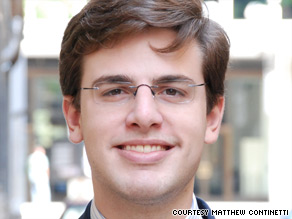
Figuring out which of the Clinton scandals still feel relevant and which don’t is a work in progress, and The Washington Free Beacon functions as a kind of laboratory for throwing things at the wall and seeing what sticks. The online paper’s editor, Matthew Continetti, is also in his early 30s, but he has that young-old-man look in the way of conservatives: sport coat, shellacked hair, everything but the bow tie. We met for lunch at the Bombay Club, where he dines often and the waiters know what he likes. Continetti started out at The Weekly Standard and became the son-in-law of its founder, William Kristol. But he split off on his own because while he was interested in Republican trench warfare, he was also interested in pop culture and GIFs and memes and generally operating with a faster metabolism.
The Free Beacon has experimented with pretty much every form of Clinton attack: she’s an old radical; she makes excuses for her cheating husband; she lied about Benghazi; her book sales tanked. In September, the site published a newly discovered 1971 letter from an adoring young Hillary Clinton to the left-wing organizer Saul Alinsky. “Dear Saul,” she began. “When is that new book [Rules for Radicals] coming out—or has it come and I somehow missed the fulfillment of Revelation?” The story was accompanied by a familiar photo of college-age Hillary with her Gloria Steinem hair. Continetti says he published the correspondence “because it’s something we haven’t seen before.” But so far, it hasn’t gotten much traction. Hillary the radical college leftist mostly just creates cognitive dissonance with who she is now, a distinguished elder, an ex-senator and ex–secretary of state with a sometimes hawkish bent who has banked $5 million in speaking fees and a rumored $14 million advance for Hard Choices.
Matthew Continetti, Bill Kristol’s son-in-law.
The Free Beacon is perhaps most true to its Millennial self when it drops the Little Rock excavation and just pokes fun at Clinton. As Continetti explains, “I see her as a high-school teacher I really dislike, who can do you harm but you can still snigger about behind her back.” The clearest image that emerges from The Free Beacon’s coverage is of Clinton not as a radical leftist or an injured wife or even a jet-setting member of the global elite, but rather as just a boring old politician. Continetti recalled listening to Bill Clinton’s speech at the 2012 Democratic Convention and, despite himself, nodding along. “I couldn’t help myself!” But Hillary “lacks that hypnotic quality,” he told me. When Hard Choices came out, The Free Beacon took the rare step of quoting a liberal CNN commentator, Sally Kohn, because she said the memoir looked like “a yawner.” In a 2014 column, Continetti wrote that Clinton “represents the past,” which is among the gentlest ways the paper has referred to her age. Other articles have proclaimed: “Affluent Grandmother Is 2016 Frontrunner,” “Memory Problems Could Doom Hillary’s White House Run,” and “Grandmother Hillary Clinton, 67, is vying to become one of the oldest world leaders in history.” When People magazine put her on its cover, The Free Beacon’s editors gleefully dived into the debate about whether she was leaning on a walker in the photo. (Her hands were, in fact, on a patio chair.)
But while this age-based approach may work for an online newspaper that delights in tabloid antics, whether a GOP presidential candidate can adopt it is another question altogether. The 2016 Republican field has the obvious advantage of including several faces who are younger and newer to politics. Marco Rubio, the 43-year-old senator from Florida and a possible contender, did recently try out a more dignified version of the age critique, calling Clinton “a 20th-century candidate” who “does not offer an agenda for moving America forward in the 21st century.” Katie Gage, from Burning Glass, advises staying far away from direct questions about Clinton’s age. She told me that even Republican-leaning women her firm talks with immediately cite some version of “Ronald Reagan was old, and he ran for president.” The idea that women have an expiration date and men don’t is especially sensitive. At the same time, Gage says there are tactful ways to suggest that Clinton is out of touch: “You can talk about the age of her ideas,” as Rubio did. It’s also fair to point out that she hasn’t generated much excitement or buzz, “that young women don’t necessarily feel even the connection with her that they felt with Barack Obama.” And, Gage adds, “when [Clinton] talks about how she and her husband sit around and watch Antiques Roadshow, well, it’s just not seen as that cool.”